Budgeting for a keynote speaker is one of the trickiest parts of event planning. Fees vary enormously — from $1,000 for an emerging expert to $200,000+ for a former president or global celebrity. And the speaker's fee is rarely the full cost. Travel, accommodation, commissions, and technical requirements add up quickly. This guide breaks down exactly what keynote speakers charge, what drives those prices, and how to find an exceptional speaker at every budget level.
Keynote Speaker Pricing Tiers
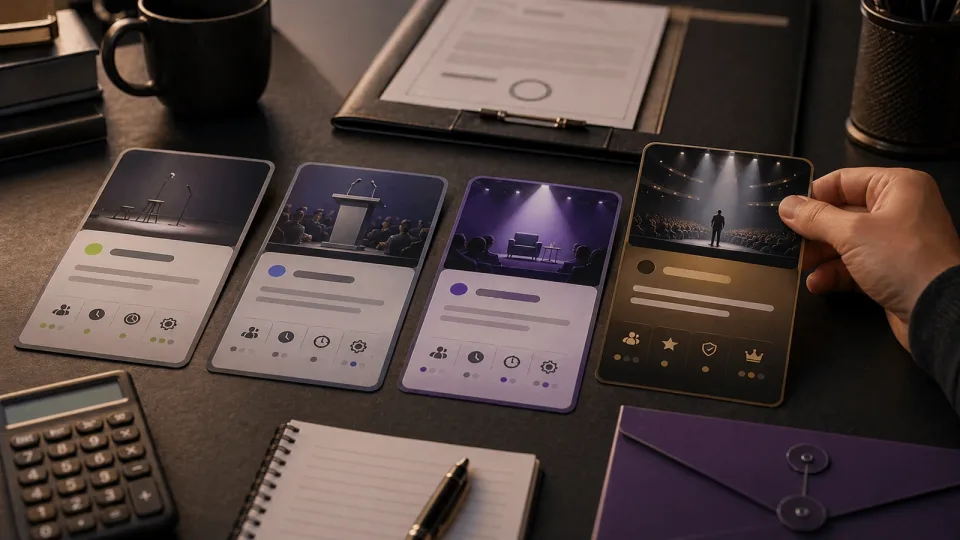
Speaker fees generally fall into four tiers. The right tier depends on your event's size, audience expectations, and what you need the speaker to accomplish.
Emerging: Fee Range — $1,000–$5,000; What You Get — Rising professionals, niche experts, academic speakers. Often flexible and eager to customize.; Best For — Webinars, panels, smaller conferences, internal events.
Professional: Fee Range — $5,000–$20,000; What You Get — Full-time speakers with proven track records. Published authors, industry leaders, experienced presenters.; Best For — Corporate conferences, industry summits, mid-size events.
Premium: Fee Range — $20,000–$50,000; What You Get — Well-known thought leaders, bestselling authors, former executives at major companies.; Best For — Large conferences, flagship events, leadership summits.
Celebrity: Fee Range — $50,000–$200,000+; What You Get — Globally recognized names — former heads of state, Olympic athletes, Fortune 500 CEOs, media personalities.; Best For — Marquee events, galas, events where name recognition drives attendance.
There's also a growing category of pro bono and reward-based speakers — professionals who speak for free in exchange for exposure, audience access, or the chance to promote their book, product, or consultancy. Platforms like SpeakUp let you post requests with "free" or "reward-based" options, and you'll often get strong responses from experts building their speaking portfolio.
What most people don't realize: the majority of professional speakers fall in the $5,000–$15,000 range. Celebrity speakers dominate the headlines, but the biggest impact-per-dollar often comes from professionals who combine deep expertise with strong delivery — without the celebrity price tag.
What Affects Speaker Fees?
No two speakers price themselves the same way. Here are the six main factors that determine what you'll pay.
Experience and Reputation
A speaker who has delivered 500 keynotes at Fortune 500 companies commands higher fees than someone with 20 talks at regional meetups. Published books, media appearances, TED talks, and a recognizable personal brand all push fees higher. But experience doesn't always correlate with quality — some emerging speakers deliver more relevant, energetic presentations than veterans who recycle the same talk.
Event Size and Format
A 45-minute keynote at a 3,000-person conference costs more than a 20-minute talk at a 50-person workshop — even from the same speaker. Virtual events typically cost less than in-person (no travel, less preparation time), though some speakers charge the same regardless of format. Half-day workshops and multi-session engagements are priced differently than standalone keynotes.
Travel and Logistics
A speaker based in New York flying to Dubai costs more than one already located in the UAE. International travel adds flights ($500–$5,000+), accommodation ($150–$500/night), ground transportation, meals, and sometimes a per diem. Some speakers include travel in their fee, others quote it separately. Always clarify upfront.
Customization and Preparation
A generic off-the-shelf keynote costs less than a heavily customized presentation. If you need the speaker to research your industry, interview your team, reference your company's data, or tailor stories to your audience's specific challenges, expect to pay more — or at least factor in additional preparation time.
Exclusivity and Industry
Some industries pay more than others. Financial services, pharma, and tech conferences typically have larger speaker budgets than nonprofit or education events. Exclusivity clauses — where a speaker agrees not to present to your competitors for a set period — can also increase the fee by 25–50%.
Supply and Demand
Popular topics like AI, leadership, and innovation are in high demand. Speakers who specialize in trending subjects can charge a premium because event organizers are competing for their time. Conversely, speakers in niche areas with fewer competitors may offer lower rates.
Hidden Costs to Budget For
The speaker's quoted fee is only part of the equation. Here's what else to plan for.
Travel and accommodation: For domestic speakers, budget $500–$2,000 on top of the fee. For international speakers, $2,000–$6,000. Business class flights are standard for premium speakers.
Bureau commission: If you book through a speaker bureau or agency, their commission (typically 20–30%) is added on top of the speaker's fee. A speaker who charges $10,000 may cost you $12,000–$13,000 through a bureau. Booking directly on a platform like SpeakUp avoids this markup entirely.
A/V and technical requirements: Some speakers need specific equipment — a confidence monitor, a wireless clicker, a particular microphone setup, or video playback capabilities. Most venues can accommodate these, but custom setups cost extra.
Recording and content rights: If you want to record the keynote and share it with attendees or on social media, some speakers charge an additional licensing fee (typically $1,000–$5,000). Others include recording rights in their standard agreement. Clarify this before signing.
Green room and hospitality: Professional speakers typically expect a private preparation space, water on stage, and basic catering. These are usually minor costs but worth including in your event logistics plan.
How to Find Quality Speakers Within Your Budget
A limited budget doesn't mean you're stuck with low-quality speakers. Here are practical strategies to maximize value.
Use platforms with transparent pricing. Unlike bureaus where pricing is opaque until you inquire, platforms like SpeakUp let you see speaker fee ranges upfront and filter by budget. Post a speaker request with your budget, and speakers who are interested at that rate will apply directly — no awkward negotiation needed.
Look for speakers already traveling to your area. A speaker who has another engagement in your city that week may offer a discounted rate since travel is already covered. Some platforms flag speakers' upcoming travel schedules for exactly this reason.
Consider emerging speakers. Professionals who are building their speaking career often deliver exceptional content at a fraction of the fee. They're also more likely to customize, spend extra time with your audience, and go above and beyond to earn a strong testimonial. Many of today's $25,000 keynote speakers were $2,000 speakers five years ago.
Book multiple speakers for the same event. If you're booking two or three speakers from the same platform or bureau, you may be able to negotiate a package rate. Some speakers also offer discounts for multi-event contracts.
Negotiate on format, not fee. If a speaker's fee is firm, negotiate on added value instead: a shorter breakout session, a Q&A panel, a post-event AMA with select attendees, or permission to use their content in your post-event materials.
Free and Low-Cost Speaker Alternatives
If your budget is extremely tight — or zero — you still have options.
Internal experts. Your own organization likely has people with deep expertise and compelling stories. A VP of Engineering talking about your company's AI implementation can be more relevant than an external speaker discussing AI in general. Internal speakers cost nothing and bring authentic credibility.
Local professionals and academics. University professors, local entrepreneurs, and community leaders are often willing to speak for modest fees ($500–$1,500) or even for free, especially if the audience aligns with their work.
Speakers building their portfolio. On platforms like SpeakUp, you can post a request with a "free" or "reward-based" label. You'll attract motivated professionals who want stage time, audience feedback, and testimonials. The quality can be surprisingly high — these are often subject matter experts who simply haven't built a speaking business yet.
Podcast guests turned speakers. If someone is a compelling podcast guest in your industry, they may be willing to speak at your event for a modest fee or as a favor. The content translation from podcast to stage is often seamless.
FAQ
What is the average keynote speaker fee?
For a professional-level keynote at a mid-size corporate event, expect to pay $7,500–$15,000 including the speaker's fee. This covers an experienced, full-time speaker with a proven track record, a polished presentation, and willingness to customize for your audience. Emerging speakers are available from $1,000–$5,000, while celebrity-tier speakers start at $50,000 and go well beyond $100,000.
Do speaker bureaus charge extra fees?
Yes. Most bureaus charge a commission of 20–30% on top of the speaker's fee, which is billed to the event organizer. If a speaker's fee is $10,000, the total through a bureau could be $12,000–$13,000. This commission covers the bureau's recommendation, vetting, contract management, and logistics coordination. Booking directly through a platform avoids this commission entirely.
Can I negotiate speaker pricing?
Absolutely. Most speakers have some flexibility, especially for events that offer strong visibility, a repeat booking opportunity, or minimal travel. Be upfront about your budget from the start — speakers appreciate transparency. You can also negotiate on format (virtual vs. in-person), duration (30 minutes vs. 60 minutes), or added value (workshop, signing session, social media promotion) rather than pushing solely on price.
Are there free speaker booking platforms?
Yes. Platforms like SpeakUp are free to use for event organizers — you can search speakers, post requests, and communicate directly without paying platform fees or commissions. The speaker sets their own fee (which can range from free to premium), and all financial arrangements are made directly between you and the speaker.